Top Vietnamese Cooking Pantry Tips – A well‑stocked Vietnamese pantry makes everyday cooking faster, easier, and far more flavorful. Vietnamese dishes rely on balance — salty, sweet, sour, spicy, and umami — and having the right ingredients on hand ensures that balance comes naturally.
Building a Vietnamese pantry doesn’t have to feel overwhelming — this guide is designed to help you ease in with clarity and confidence. By breaking down the essential ingredients, everyday cooking tools, and simple habits that shape Vietnamese home cooking, it gives you a practical starting point for building your own meal rituals. Whether you’re stocking your first fish sauce, choosing the right noodles, or learning which tools actually make weeknight prep easier, these tips help you understand what matters most so you can cook intentionally, intuitively, and with a sense of ease.
In This Guide: Top Vietnamese Cooking Pantry Tips
Core Vietnamese Pantry Staples
These essentials form the backbone of most Vietnamese recipes. Keeping them organized and ready to use makes cooking smoother.
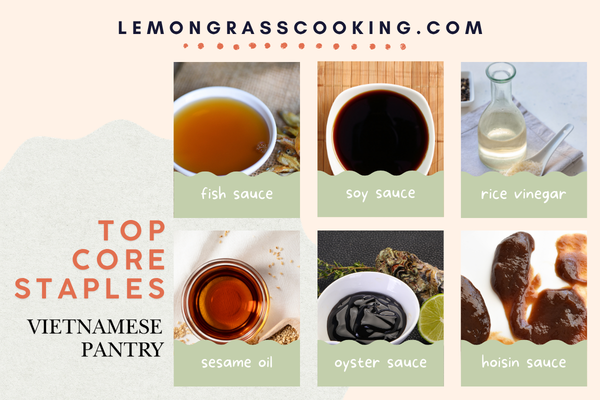
- Fish sauce — A salty, savory, deeply aromatic seasoning made from fermented anchovies and salt, central to Vietnamese cooking. Related: 5 Easy Ways to Use Fish Sauce, A Beginner’s Guide to Fish Sauce (Nước Mắm)
- Soy sauce — A dark, umami‑rich condiment brewed from soybeans, wheat, and salt, originating in China and used across Asia for depth and color. Related: Vietnamese Pantry Tip: Simple Soy Marinade,
- Rice vinegar — A light, clean, gently acidic vinegar made from fermented rice, common in East Asian cooking for brightness without harshness. Related: How to Pickle Garlic and Shallots, The Easiest Black Pepper Vinaigrette
- Sesame oil — A fragrant, nutty finishing oil pressed from toasted sesame seeds, long used in Chinese and Korean kitchens for aroma and warmth. Related: Sesame Lemongrass Paste Marinade,
- Oyster sauce — A thick, glossy, sweet‑savory sauce made from oyster extracts, born in Cantonese cooking and used to add body and richness. Related: Vietnamese Sauces & Marinades
- Hoisin sauce — A sweet, tangy, aromatic sauce made from fermented soybeans, garlic, and spices, originating in southern China and used for glaze and depth. Related: Vietnamese Sauces & Marinades
- Chili garlic sauce — A punchy, spicy, garlicky condiment made from chilies, garlic, and vinegar, rooted in Chinese cooking and widely used to add heat and brightness. Related: Vietnamese Seafood Chili Crisp Hot Pot, The Saigon Chili Crisp Tofu Bowl
These sauces create depth, brightness, and the signature Vietnamese flavor profile.
Everyday Dry Goods
Dry staples help build quick meals without much prep.
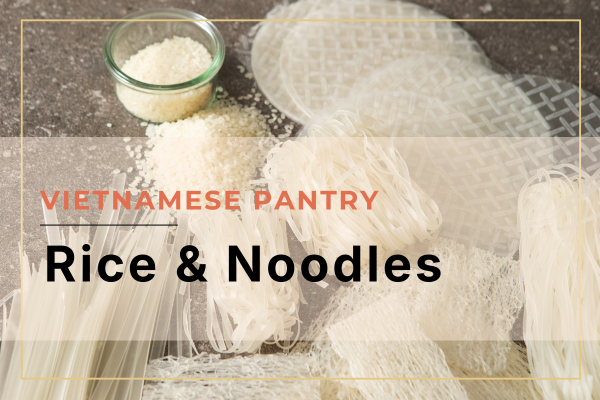
- Rice noodles
- Jasmine rice
- Coconut milk
- Brown sugar
Rice noodles and jasmine rice are foundational. Coconut milk adds richness, while brown sugar helps balance salty sauces.
Related Pantry Tips:
Fresh Vietnamese Herbs & Aromatics
Vietnamese cooking depends heavily on fresh aromatics. They bring fragrance and complexity to even the simplest dishes.
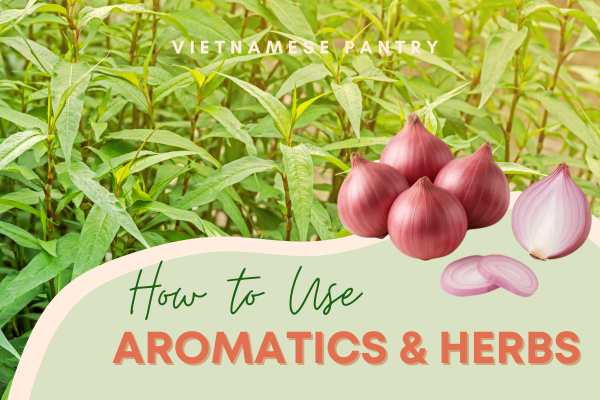
- Garlic
- Shallots
- Ginger
- Limes
- Green onions
Keeping these stocked ensures every dish tastes fresh and vibrant.
Related Recipes & Tips:
- How to Store Fresh Herbs for Vietnamese Cooking
- The Top 3 Vietnamese Herbs You’ll Find in Everyday Vietnamese Cooking
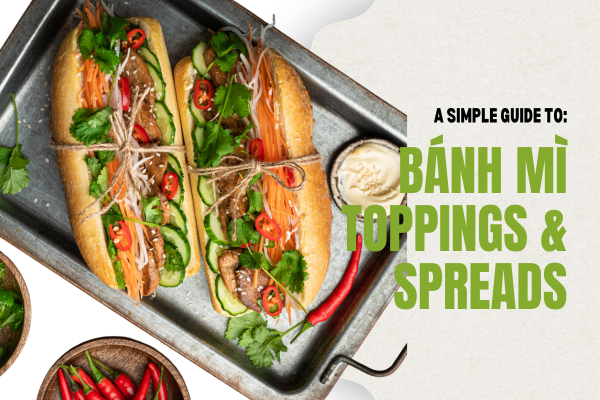
- The Essential Guide to Banh Mi Toppings & Spreads
How To Organize a Vietnamese Pantry
A clean, organized pantry makes cooking more efficient.
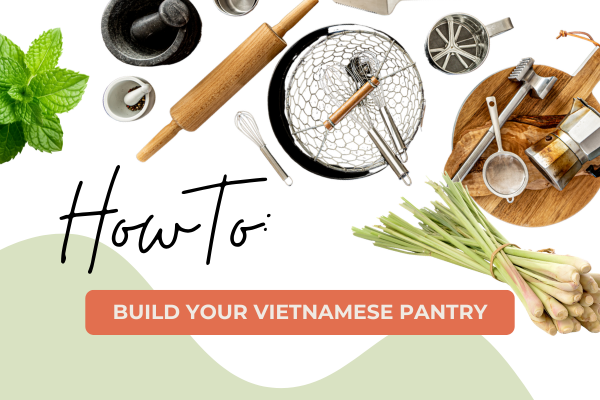
- Group sauces together for quick access
- Store fish sauce and soy sauce in cool, dark spaces
- Keep aromatics in breathable containers
- Use airtight containers for noodles and rice
- Portion sauces into small bowls during cooking for cleaner workflow
This setup keeps ingredients fresh and makes prep easier.
Notes for Better Vietnamese Cooking
Small adjustments elevate everyday dishes.
- Choose high‑quality fish sauce for the best flavor
- Maintain balance by keeping sweet, salty, sour, and umami ingredients stocked
- Refresh pantry items every few months
Shop Pantry Ingredients for Your Vietnamese Pantry
A few minimal Vietnamese essentials to keep on hand for fast, flavorful cooking.
- Aromatic Essence: Pandan Extract
- Perfect Finishing Sauce: Maggi Seasoning
- Rice Noodle Favorite: Three Ladies Rice Noodles
- Top Choice: Red Boat Fish Sauce
- Cooking Curry: Madras Curry Powder
- Premium Options: Soy Sauce
- Simple Ingredients: Rice Vinegar
- Heat & Spice: Chili Crisp Oil
- Umami Flavor Boost: Oyster Sauce & Mushroom Seasoning
- Creamy Thickener: Coconut Milk
FAQ: Top Vietnamese Cooking Pantry Tips
What fish sauce works best? High‑quality fish sauce should list only anchovies and salt. Look for brands with a clean, savory aroma and no harsh aftertaste. Premium varieties create deeper flavor in marinades, dipping sauces, and broths.
Do Vietnamese sauces need refrigeration? Most pantry sauces stay shelf‑stable, including fish sauce, soy sauce, oyster sauce, and hoisin. Chili garlic sauce, opened coconut milk, and fresh aromatics should be refrigerated to maintain freshness.
Are rice noodles interchangeable? Rice noodles come in multiple widths and shapes. Thin noodles work best for soups and light stir‑fries. Wider noodles hold up to heavier sauces. They can be swapped in everyday dishes, but texture and absorption will vary.
Can jasmine rice be replaced? Jasmine rice provides the signature fragrance and fluffy texture common in Vietnamese meals. Short‑grain or sticky rice changes the dish entirely. For authentic results, jasmine rice is the preferred staple.
How long do Vietnamese pantry staples last? Most sauces last several months when stored properly. Fish sauce and soy sauce remain stable for a year or more. Dry noodles and rice stay fresh when kept in airtight containers. Aromatics should be rotated weekly for best flavor.
Is coconut milk essential for Vietnamese cooking? Coconut milk isn’t used in every dish, but it’s important for curries, braises, and certain regional recipes. Keeping one or two cans in the pantry ensures you can add richness when needed.
What aromatics should always be stocked? Garlic, shallots, ginger, limes, and green onions form the base of countless Vietnamese dishes. These ingredients add brightness, fragrance, and depth, making them essential for everyday cooking.
How do you keep sauces organized? Grouping sauces by category — salty, sweet, sour, spicy — makes cooking faster. Keeping them in one accessible area reduces prep time and helps maintain a clean workflow.
Do Vietnamese recipes require special equipment? Most dishes rely on simple tools: a sharp knife, small bowls for portioning sauces, and airtight containers for dry goods. No specialized equipment is needed to cook authentic meals at home.
What’s the easiest way to start cooking Vietnamese food? Begin with a small set of core sauces and aromatics. Build meals around rice or noodles. Focus on balance — salty, sweet, sour, and umami. With a stocked pantry, Vietnamese cooking becomes fast and intuitive.
Vietnamese Sauces & Marinades
Vietnamese sauces and marinades rely on clean, balanced flavors — bright acidity, gentle sweetness, and savory depth — built from a small set of pantry staples. With a few core mixes, you can season proteins, finish bowls, and build dipping sauces in minutes, creating weeknight meals that feel effortless and distinctly Vietnamese. Browse Sauce Recipes:
- Simple Chili-Lime Drizzle Sauce
- Easy Nước Chấm Recipe (Vietnamese Dipping Sauce)
- Sesame Lemongrass Paste Marinade
- Easy Lemongrass Everyday Marinade
- Easy Vietnamese Chicken Marinade
- 10-Min Hoisin-Lime Marinade
SEE Related Marinade Tips: