Artichoke Lemongrass Confit Bánh Mì – Spring Edition!
Spring is the season of soft herbs, tender vegetables, and that first wave of brightness after winter—and nothing captures that energy better than artichokes. This Artichoke Lemongrass Confit Bánh Mì is a fresh, modern, vegetarian build that still feels deeply Vietnamese in its aromatic logic. Slow‑melted artichokes and lemongrass create a rich, savory base, while pickles, herbs, and lime bring the lift and crunch that make bánh mì irresistible.
This sandwich is lush, fragrant, and layered—but still light enough to feel like spring. It’s the kind of recipe that makes people pause mid‑bite and say, “Wait… what is this?” in the best way.
In This Recipe Guide
Why This is a Crave-Worthy Recipe
- Spring‑forward flavor profile using artichokes, lemongrass, lime, and fresh herbs.
- Vegetarian but deeply savory, thanks to confit aromatics and fish sauce (or soy sauce if vegan).
- Meal‑prep friendly—the confit lasts up to two weeks and gets better as it sits.
- Premium bánh mì energy without being fussy.
- A new signature build that feels both modern and rooted.
What Is Artichoke Lemongrass Confit?
A slow, gentle simmer that results in silky artichokes, aromatic oil, and a spoonable, savory base that becomes the heart of this banh mi sandwich.
Bring these to a slow simmer for a silky confit:
- artichoke hearts
- sliced lemongrass
- garlic
- shallot
- neutral oil
- fish sauce, sugar, and salt
Browse Related Recipe Favorites:
- Seafood Option: Crab & Yuzu Mayo Bánh Mì
- Vegetarian: Roasted Vegetable Bánh Mì and Charred Eggplant and Scallion Oil Banh Mi
- Tofu Base: Crispy Garlic Tofu Bánh Mì
- Make it a Salad: How to Build a Banh Mi Crunch Salad
- Traditional: Classic Vietnamese Cold-Cut Sandwich (Bánh Mì Thịt Nguội)
- Browse more Bánh Mì recipes
Spring Ingredients That Make This Recipe Shine
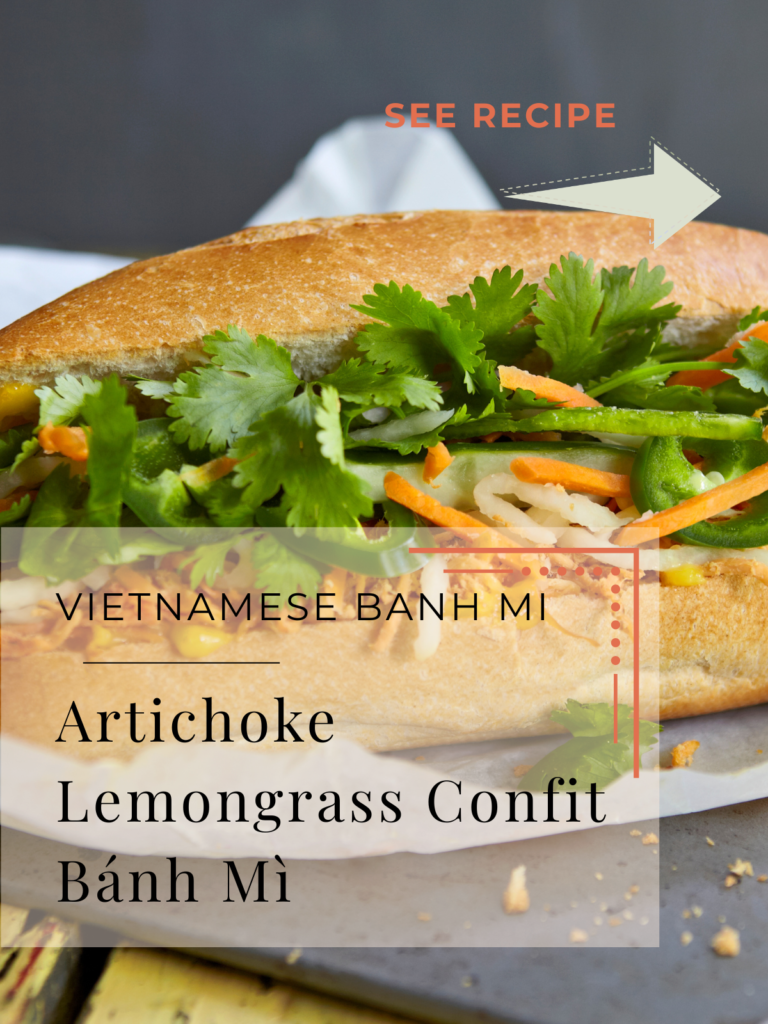
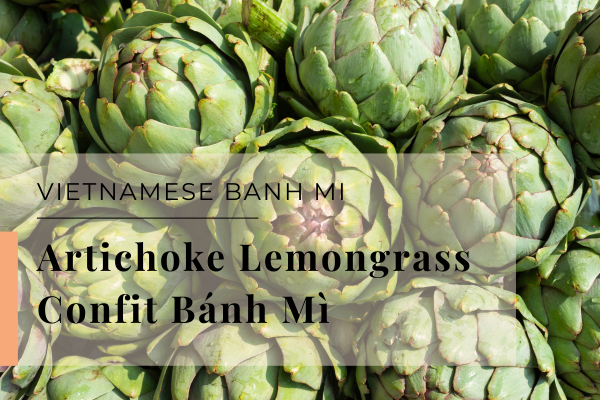
- Artichokes: peak spring vegetable, tender and mild
- Lemongrass: bright, citrusy, and cleansing
- Cucumber + herbs: cooling, crisp, and refreshing
- Pickled carrots + daikon: classic Vietnamese brightness
- Lime: the acid that ties everything together
Artichoke-Lemongrass Confit Bánh Mì
Equipment
- Cutting board & knife
- Small pot
- Small bowl
- Toaster or oven (to warm baguettes)
Ingredients
Artichoke Lemongrass Confit
- 1 can artichoke hearts drained
- 2 stalks lemongrass finely sliced
- 6 cloves garlic smashed
- 1 small shallot thinly sliced
- 1 cup neutral oil or enough to submerge
- 1 tablespoon fish sauce
- 1 teaspoon sugar
- One half teaspoon salt
Spread
- 3 tablespoons mashed artichoke confit
- 2 tablespoons mayo
- 1 teaspoon lime juice
- One half teaspoon chili crisp optional
- Pickles and Fresh Elements
- One half cup pickled carrots and daikon
- One half small cucumber thinly sliced
- Fresh cilantro
- Sliced jalapenos
Assembly
- 1 Vietnamese baguette
- Maggi seasoning optional
- Black pepper
Instructions
- Make the artichoke lemongrass confit by adding artichokes, lemongrass, garlic, shallot, and oil to a small pot. Simmer gently for 25 to 30 minutes until everything softens and becomes aromatic. Stir in fish sauce, sugar, and salt. Let cool and mash a few artichokes into the oil for texture.
- Make the spread by mixing the mashed confit with mayo, lime juice, and chili crisp. Add a little confit oil if you want it richer.
- Assemble the banh mi by lightly toasting the baguette, spreading both sides with the confit spread, layering in artichoke pieces, adding pickled carrots and daikon, cucumber, cilantro, and jalapenos, then finishing with a small drizzle of Maggi and cracked black pepper.
Notes
- The confit keeps one to two weeks in the fridge and the oil is great on noodles, eggs, or roasted vegetables.
- A soft fried egg or tofu crisped in confit oil makes the sandwich even richer.
- If your baguette is thick, scoop out a little of the interior to help with layering.
Give These Artichoke Lemongrass Confit Bánh Mì Variations a Go
Make it Vegan
- Replace fish sauce with soy sauce or vegan fish sauce.
- Add crispy tofu slices seared in confit oil.
- Browse Vietnamese Vegetarian recipes
Make it Spicy
- Add more chili crisp to the spread.
- Stir fresh Thai chili into the confit oil.
- Add pickled jalapeños for extra heat.
Make it Protein‑Forward
- Add a soft‑fried egg. Related Recipe: Quick Fried Egg Bánh Mì
- Add thin slices of pan‑seared mushrooms cooked in confit oil. Related Recipe: Caramelized Mushroom Bánh Mì
- Add grilled lemongrass tofu. Related Recipe: The Saigon Chili Crisp Tofu Bowl
Make it Picnic‑Friendly
- Pre‑slice baguettes and pack the components separately.
- Assemble on‑site to keep everything crisp.
Tips on How to Assemble Your Perfect Banh Mi
Recipe & Technique FAQ
What makes this bánh mì spring‑friendly?
This recipe uses peak‑season artichokes, fresh herbs, cooling cucumber, and bright aromatics like lemongrass and lime. The flavors are lighter, cleaner, and more herb‑forward than heavier winter builds.
Can I make the artichoke lemongrass confit ahead of time?
Yes—this is one of the best parts. The confit lasts 1–2 weeks in the fridge and actually improves as the aromatics infuse the oil. It’s ideal for meal prep.
What baguette works best for bánh mì?
A Vietnamese baguette is ideal—light, crisp, and airy. If you can’t find one, choose a thin French baguette and scoop out a little of the interior for better layering.
Is this recipe vegetarian or vegan?
It’s naturally vegetarian. To make it vegan, swap the fish sauce for soy sauce or vegan fish sauce and use vegan mayo in the spread.
Can I use frozen or jarred artichokes?
Yes—canned or jarred artichokes work perfectly because they’re already tender and ready to confit. Frozen artichokes also work but may need a few extra minutes of simmering.
What else can I do with the leftover confit oil?
Use it with:
- Noodle Bowls: Vietnamese Bowls
- Fried eggs: Quick Fried Egg Bánh Mì
- Roasted vegetables: Roasted Vegetable Bánh Mì
- Rice bowls: Vietnamese Bowls
- Grilled tofu: Crispy Garlic Tofu Bánh Mì
- Browse more Banh Mi Recipes: Vietnamese Bánh Mì Recipes – Lemongrass Cooking
More on Confit in Vietnamese Cooking
Confit isn’t traditionally Vietnamese in the French sense of duck legs submerged in fat—but the technique of slow‑cooking aromatics in oil is absolutely part of Vietnamese culinary logic. Vietnam absorbed elements of French cooking during the colonial period, and while “confit” as a term isn’t used in Vietnamese kitchens, the method shows up in familiar ways:
How Confit Shows Up in Vietnamese Cooking
- Aromatic oil infusions: Vietnamese cooks often gently heat shallots, garlic, scallions, lemongrass, or chili in oil to create flavored oils (dầu hành, dầu tỏi, dầu sả). This is essentially a confit—low heat, slow infusion, aromatic depth
- Preserving aromatics: Before refrigeration was common, submerging aromatics in oil helped extend their shelf life, especially in the South where humidity is high.
- Texture building: Slow‑cooked aromatics become soft, jammy, and spoonable—perfect for topping noodles, rice, or proteins.
- Flavor layering: Vietnamese cuisine relies on layering fresh, bright elements over deep, savory bases. Confit fits this pattern beautifully
French Influence Without Being French
While the word “confit” is French, the practice of gently cooking aromatics in oil aligns with Vietnamese cooking instincts:
- low heat
- aromatic-forward
- balanced with fish sauce, sugar, and salt
- used as a base to build brightness on top
This is why your Artichoke Lemongrass Confit feels so natural in a bánh mì. It’s not a fusion gimmick—it’s a technique that sits comfortably inside Vietnamese flavor logic.
Build Your Vietnamese Pantry:
- Vietnamese Noodles & Rice
- Vietnamese Bánh Mì Recipes
- Vietnamese Pickles & Preserves
- Vietnamese Aromatics & Herbs