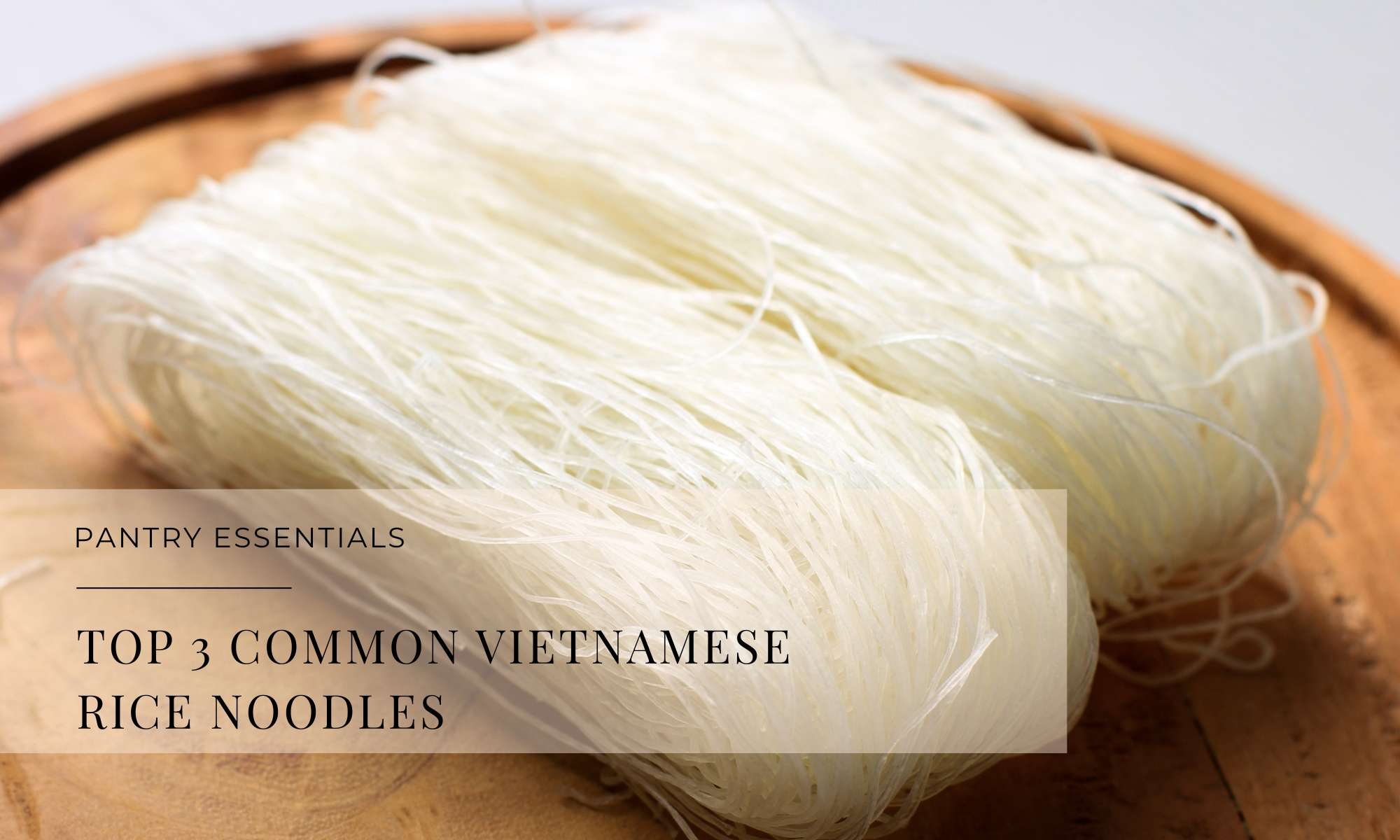
The Three Vietnamese Rice Noodles You Should Know
Vietnamese cooking uses three core rice noodles — bún, bánh phở, and bánh canh — each with its own shape, texture, and purpose. Once you understand how they behave, choosing the right noodle for bowls, soups, and everyday cooking becomes effortless. This guide walks you through what they are, how they taste, and when to use each one.
In This Guide: The Three Vietnamese Rice Noodles You Should Know
Top 3 Common Rice Noodles
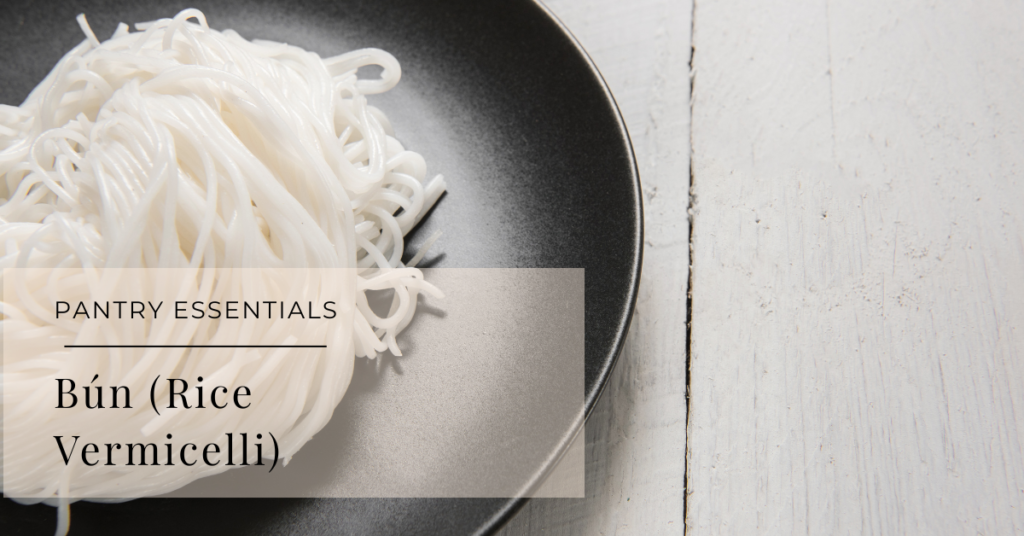
1. Bún (Rice Vermicelli)
Shape: Thin, round strands
Texture: Light, springy, quick‑cooking
Flavor: Neutral, clean, slightly sweet from the rice
Bún is the noodle that makes Vietnamese food feel fresh. It’s the backbone of noodle bowls and the noodle that carries herbs, nước chấm, and grilled proteins beautifully. Because it’s so light, it works especially well in dishes where the herbs and sauce do the heavy lifting. Check out the Lemongrass Cooking Pantry tip on How to Cook Perfect Rice Vermicelli Noodles – Lemongrass Cooking and Vietnamese Rice Paper Guide
Best for
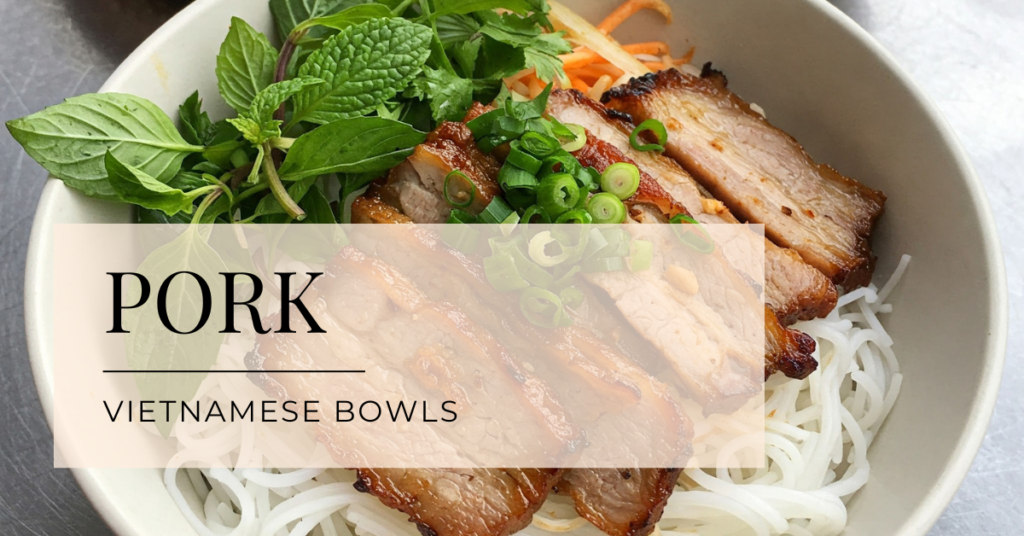
- Bún bowls (lemongrass chicken, tofu, grilled pork)
- Fresh rolls
- Light brothy soups
- Everyday meal prep
How to cook it
Most rice vermicelli cooks in 3–5 minutes, but some brands — including the Three Ladies Brand I use — take longer. We simmer these noodles gently for 10–12 minutes, then rinse them in an ice bath to keep them springy and separate.
How to Cook Perfect Rice Vermicelli Noodles
Equipment
- Medium or large pot
- Strainer or colander
- Large bowl (for ice bath)
- Tongs or chopsticks
- Measuring cup for scooping water if needed)
Materials
- 1 package Three Ladies Brand rice noodles
- Water for simmering
- Ice for ice bath
Instructions
Heat the water
- Fill a pot with water and heat it until it’s very hot and steaming, with small bubbles forming. It should be just below a full boil.
Add the dry noodles
- Place the dried rice noodles into the pot. Keep the heat low so the water stays at a gentle simmer, not a rolling boil. Too hot, noodles will become soggy.
Simmer for 10–12 minutes
- Cook the noodles, stirring occasionally to prevent clumping. They’re ready when soft, flexible, and slightly springy. Don't be afraid to add a couple more minutes to the cook time if you feel it's needed.
Drain immediately
- Once the noodles reach the right texture, drain them right away to stop further softening.
Transfer to an ice bath
- Place the noodles into a large bowl filled with ice water. Let them sit for 1–2 minutes to stop the cooking and firm up
Drain well
- Remove the noodles from the ice bath and drain completely. This requires resting of the noodles for a solid 30-40 minutes. Use immediately or, toss with a tiny bit of neutral oil if storing.
How to Store for Meal Prep
- Let noodles cool completely before storing.
- Place in an airtight container and toss with a tiny drizzle of oil to prevent sticking.
- Refrigerate for 3–4 days.
- To reheat, loosen with warm water, a quick hot‑water dip, or 20–30 seconds in the microwave with a damp paper towel.
Notes
- Avoid boiling the noodles. It will break down the noodles and become soggy.
- Place in an airtight container and toss with a tiny bit of oil to prevent sticking.
- Refrigerate for 3-4 days.
- To reheat, loosen with warm water, a quick hot-water dip, or 20-30 seconds on the microwave. with a damp paper towel.
- Great for noodle bowls, salads, spring rolls, and meal-prep lunches and dinners.
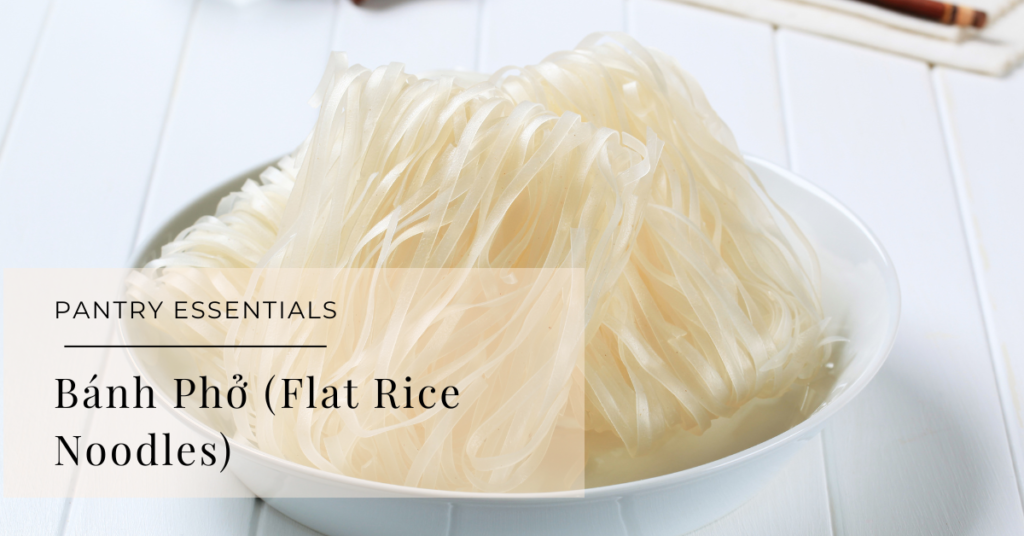
2. Bánh Phở (Flat Rice Noodles)
Shape: Flat, medium‑wide ribbons
Texture: Chewy, silky, substantial
Flavor: Mild, slightly nutty from the rice
Bánh phở is the noodle with presence. It holds up to heat, sauce, and broth, and gives dishes that signature chewy bite. If bún is light and refreshing, bánh phở is grounding — the noodle you reach for when you want something warm, saucy, or comforting. Give this Peanut Shallot Bánh Phở Noodle Bowl – Lemongrass Cooking a try!
Best for
- Phở
- Stir‑fries
- Heavier bowls (like peanut sauce bowls)
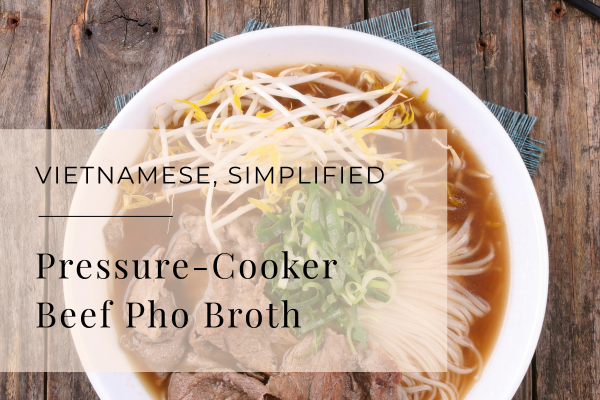
- Brothy, aromatic soups
How to cook it
Fresh bánh phở only needs a quick blanch. Dried versions cook in 5–7 minutes and benefit from a cold rinse to keep them from sticking.
Pairs well with: Grilled or pan‑seared proteins, broths, peanut sauce, sautéed aromatics
- Vietnamese Pho at Home: A Simple Guide to Quick Beef & Chicken Pho
- Peanut‑Tamarind Chicken Breast Bowl (Vietnamese Sweet–Sour & Peanut)
- The Ultimate Peanut Lime Dressing
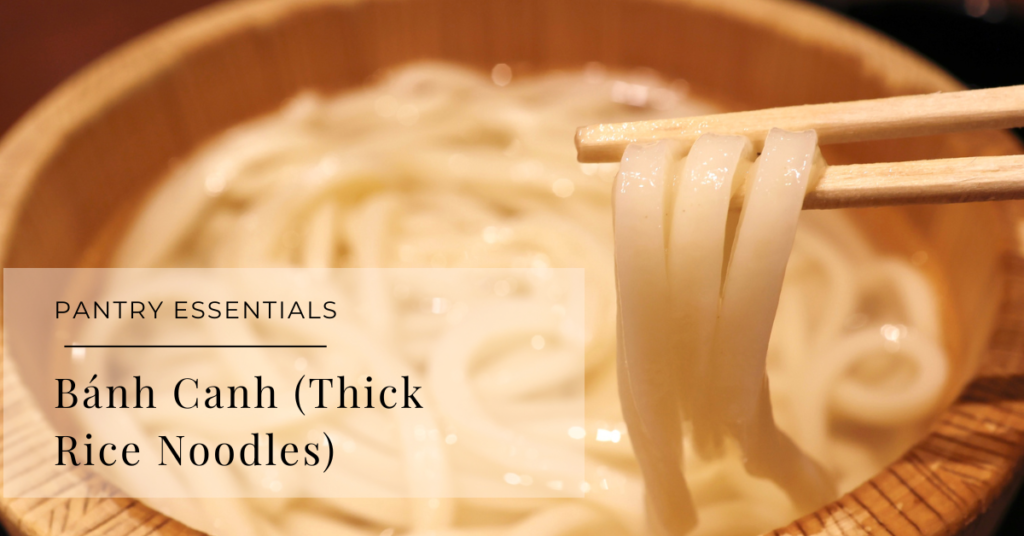
3. Bánh Canh (Thick Rice or Rice‑Tapioca Noodles)
Shape: Thick, round, udon‑like strands
Texture: Soft, bouncy, slightly elastic
Flavor: Mild, with a subtle chew from the tapioca blend
Bánh canh is comfort food. The tapioca blend gives it that signature bounce — the noodle equivalent of a warm blanket. It’s the noodle you choose when you want something cozy, slurpable, and deeply satisfying.
Best for
- Bánh canh cua
- Hearty & light soups
- Coconut‑based broths: Coconut‑Ginger Chicken Hot Pot, Steamed Mussels in Lemongrass Coconut Broth
- Dishes where you want a plush, bouncy noodle
How to cook it
Bánh canh comes in two forms.
Dried noodles take 8–12 minutes to cook, depending on thickness.
Fresh, pre‑cooked bánh canh — the kind you’ll find in the refrigerated section at Vietnamese markets — only needs to be heated through. It softens quickly and has that signature bouncy, silky texture.
Shop Noodles & Pantry Ingredients
A few minimal Vietnamese essentials to keep on hand for fast, flavorful cooking.
- Tested & Recommended: Rice Vermicelli Noodles (Bun)
- Tested & Recommended: Three Ladies Brand Bánh Phở
- Pantry Basic: Premium Jasmine Rice
- Top Choice: Red Boat Fish Sauce
- Premium Options: Soy Sauce
- Simple Ingredients: Rice Vinegar
- Umami Flavor Boost: Oyster Sauce & Mushroom Seasoning
- Creamy Thickener: Coconut Milk
- Perfect Finishing Sauce: Maggi Seasoning
This post may contain affiliate links. As an Amazon Associate, we earn from qualifying purchases. These small commissions help support the development of new recipes, pantry guides, and cooking resources on Lemongrass Cooking.
Learn More About Vietnamese Noodles & Rice
More Ways to Explore: Vietnamese Bowls