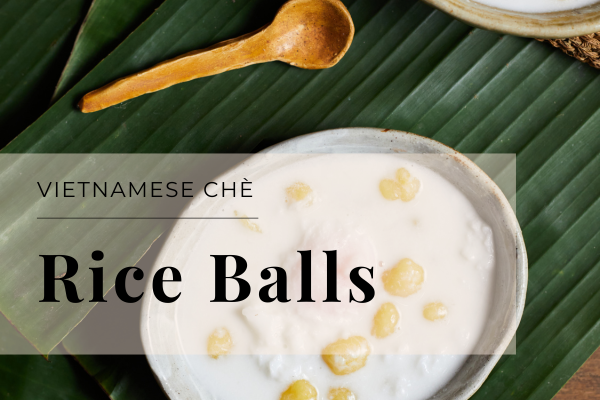
Consider this the definitive guide to Vietnamese rice balls!
A modern guide to chè trôi nước, floating rice balls, and the quiet craft behind them. Vietnamese rice balls — whether floating in ginger syrup, tucked into coconut milk, or served chilled with fruit — are part of a broader family of chè trôi nước and glutinous‑rice desserts that show up across home kitchens, street stalls, and holiday tables. They’re simple, comforting, and endlessly adaptable, built on the same Vietnamese logic that shapes so many dishes: balance, texture, and gentle aromatics rather than heavy sweetness.
This guide gives you the essentials: what they are, how they work, why they matter, and how to make them feel clean and modern at home.
What Vietnamese Rice Balls Actually Are
At their core, Vietnamese rice balls are made from glutinous rice flour (bột nếp), which turns soft, chewy, and slightly elastic when cooked. They can be:
- Filled (mung bean paste, black sesame, coconut)
- Unfilled (simple dough balls served in broth or coconut milk)
- Warm (ginger syrup, coconut cream)
- Chilled (coconut milk, fruit, basil seeds)
They’re part of the broader chè category — Vietnamese sweet soups, puddings, and drinks — but rice balls sit in their own special corner because of their texture and ritual feel.
Are Rice Balls Common or Popular in Vietnamese Cooking?
Yes — but in a very Vietnamese way. They’re not an everyday dessert like chè đậu or chè bắp, but they’re deeply familiar, especially in the south and central regions.
Where you’ll see them:
- Street stalls selling warm chè in the evenings
- Markets where vendors keep ginger syrup simmering in big aluminum pots
- Family gatherings where a pot of chè trôi nước sits on the table for everyone to scoop from
- Festive days like Tết Hàn Thực (Cold Food Festival), where rice balls symbolize warmth, unity, and togetherness
They’re comforting, humble, and nostalgic — but also incredibly adaptable for modern, lighter cooking.
The Two Main Styles of Rice Balls
1. Chè Trôi Nước (Floating Rice Balls in Ginger Syrup)
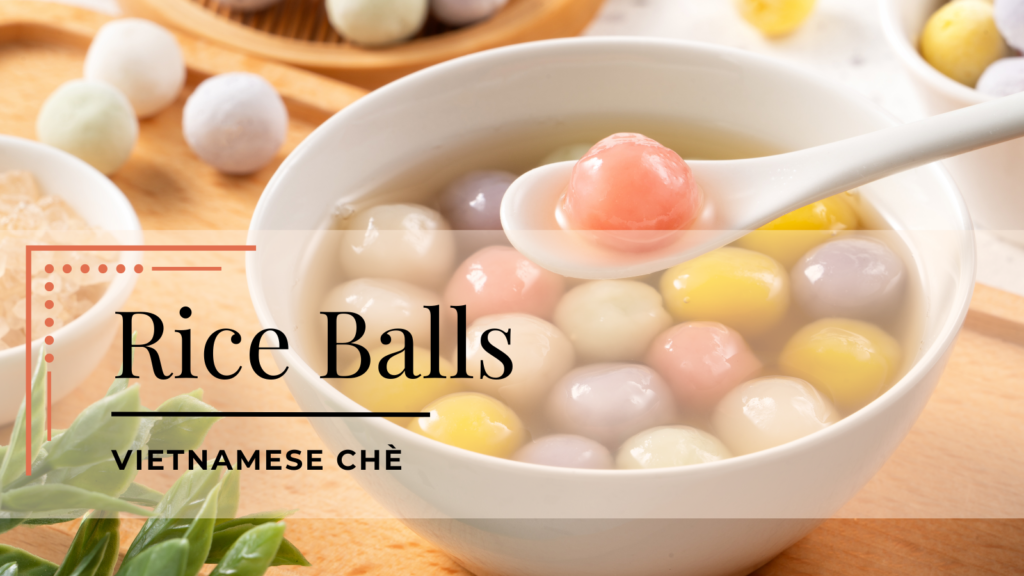
The classic: chewy rice balls filled with mung bean paste, served warm in a lightly sweet ginger syrup.
Flavor logic: warming, aromatic, balanced.
2. Coconut‑Forward Rice Balls (Chilled or Warm)
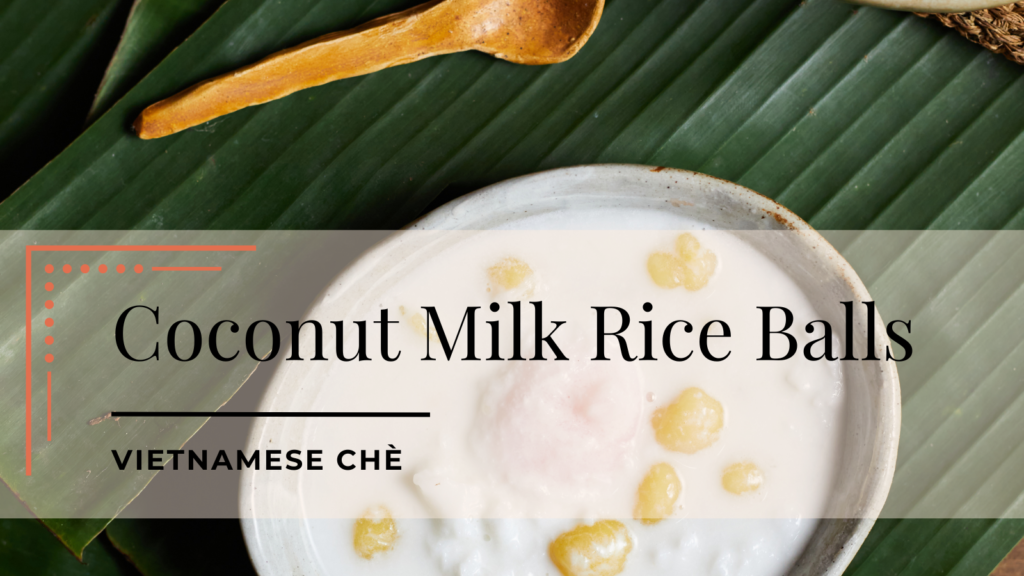
Rice balls served in coconut milk, sometimes with pandan, basil seeds, or fruit.
Flavor logic: creamy, cooling, minimal.
Why They Work So Well in Vietnamese Street Food
Rice balls are a perfect street food because they’re:
- Portable — served in small bowls or cups
- Affordable — made from pantry staples
- Comforting — warm syrup + chewy texture
- Aromatic — ginger, pandan, coconut, sesame
- Customizable — vendors riff endlessly with fillings and toppings
There’s something deeply satisfying about scooping a warm, chewy rice ball from a pot that’s been simmering all afternoon — it’s the kind of quiet, everyday luxury that defines Vietnamese street food.
The Vietnamese Flavors Behind Rice Balls
Rice balls aren’t meant to be sugary. Traditional versions rely on:
- Ginger for warmth
- Coconut milk for richness
- Mung bean or sesame for earthiness
- Pandan for aroma
- A pinch of salt to balance everything
The sweetness is intentionally light — just enough to support the aromatics, never enough to overwhelm them. This makes rice balls a perfect fit for your clean, modern, minimal‑sweetness approach.
Pantry Basics for Vietnamese Rice Balls
These are the core ingredients that make Vietnamese rice balls work — simple, pantry‑friendly staples that create chew, aroma, and balance without relying on heavy sweetness. Once you understand how each one behaves, you can mix and match fillings, broths, and textures to build endless modern variations that still feel deeply Vietnamese.
| Ingredient | Role | Notes |
| Glutinous rice flour (bột nếp) | Dough | Gives chew; not interchangeable with regular rice flou |
| Mung beands | Filling | Earthy, creamy, protein‑rich |
| Black sesame | Filling | Nutty, aromatic, deeply Vietnamese |
| Coconut milk | Broth or topping | Use full‑fat for richness; thin with water for lighter versions |
| Ginger | Syrup | Adds warmth and balance |
| Pandan | Aromatic | Floral, green, clean |
| Tapioca pearls | Optional texture | Adds chew to broths or coconut milk |
Technique: How Rice Balls Get Their Chew
The signature texture comes from:
- Glutinous rice flour
- A warm‑water dough
- Gentle simmering (never a rolling boil)
- A cold‑water shock to tighten the surface
This gives you that perfect soft‑chewy bite — not gummy, not mushy.
Fun Facts About Vietnamese Rice Balls
- They’re considered a symbol of unity because the round shape represents completeness and harmony.
- In some regions, rice balls are given to guests during celebrations as a sign of warmth and welcome.
- Street vendors often keep the ginger syrup simmering all day, adding water and sugar as needed — a quiet, continuous craft.
- The floating of the rice balls in syrup is seen as a sign they’re cooked and “ready to be enjoyed,” which is why the name trôi nước (“floating in water”) stuck.
- Many families have their own version — some filled, some unfilled, some tiny, some oversized — but the technique is always passed down casually, not formally.